



How did a mall store selling over-roasted coffee beans in Seattle become the world’s largest coffeehouse chain — Starbucks?
Many of our readers have likely visited Starbucks cafés multiple times, not only in capital cities but also abroad — from Paris and Berlin to Turkey and Thailand. And everywhere, the scene is the same: crowds of customers gathering to drink expensive, mediocre coffee. Perhaps that’s why, starting January 2025, The Wall Street Journal reports that the company will be forced to take certain “repressive measures”: in the U.S., Starbucks will ban customers from occupying tables or using restrooms without making a purchase. This is meant to free up at least some space. The “open-door” policy introduced in 2018 didn’t last long.
As of 2024, Starbucks operates 36,000 coffee shops in 84 countries, making it the largest coffee chain in the world. The company’s market capitalization reached $110.8 billion, and brand recognition for the “green mermaid” hit 70%. (By comparison, McDonald’s is recognized by 93% of people, and Coca-Cola by 94%.) If this trend continues for a few more years, coffee might become more popular than burgers.
The Slovenian philosopher, Marxist thinker, and professional provocateur Slavoj Žižek has often cited Starbucks as an example in his critique of modern capitalism. His idea is simple: “I go to Starbucks and they tell me, yes, our coffee is overpriced and not particularly good, but in return, you get a unique atmosphere — and 1% of your purchase goes to help starving children in Guatemala or to save the rainforest.” Žižek quips, “But I don’t want to save the rainforest. I just want a damn coffee and not to think about anything else.” Yet this is the paradox of capitalism: it turns out people deeply crave a “third place” — a refuge from both home and work. And it doesn’t matter that the coffee is overpriced and underwhelming or that the space is furnished with worn-out couches bought at a garage sale (as was the case at one Starbucks in Manhattan).
Maybe that’s the secret to Starbucks’ success?
The Coffee Republic
The story of Starbucks begins in 1971 in the port city of Seattle, Washington. Located in the far northwest corner of the United States, bordering Canada, the state of Washington is often seen by many Americans as a remote backwater. Most people might recognize the area as the setting for films like Sleepless in Seattle, Twin Peaks, or the Twilight saga. Launching a coffee empire from here would seem, at the very least, a strange choice.
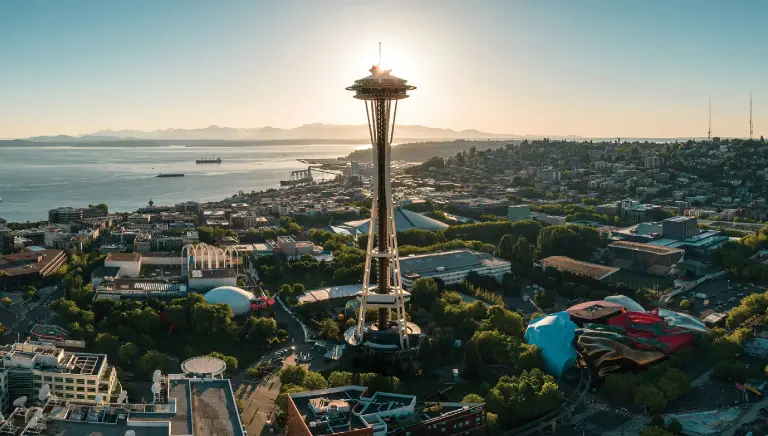
But at the outset, there was no grand ambition to conquer America or instill coffee culture in the American people. As odd as it sounds today, America in the 1970s was not a “coffee nation.” A cup of coffee didn’t accompany you everywhere you went. Most Americans drank instant coffee from a can during breakfast, and on the way to work, you might grab a cup of what today’s urban dwellers would call nothing short of dishwater or swill.
Chasing profits, merchants sold coffee brewed from cheap, low-quality African robusta beans, often mixing them into more expensive varieties. Robusta is high in caffeine — it wakes you up — but it has a bitter, flat flavor. No richness, no complexity. People drank that kind of coffee not for pleasure, but for effect. Today, robusta makes up about 20–30% of the coffee market, but in the 1970s, it dominated the American cup.
The founding fathers of Starbucks saw their mission differently: they wanted to introduce Americans to “real coffee.” Not to everyone, though — only to a select few. The first Starbucks was conceived and launched as a specialty retail store selling coffee beans, tea, and spices. You could get a cup brewed only if you wanted to sample the coffee before purchasing it.
Previously, we explored the rich history of coffee — a journey that begins centuries ago, steeped in legend and the irresistible aroma of roasted beans. According to an ancient tale, it all started on the Ethiopian plateau, where a young goat herder named Kaldi noticed his goats dancing energetically and staying awake all night after eating mysterious red berries. That discovery marked the first step toward what would become one of the world’s most beloved beverages, enjoyed daily by millions across the globe. And the story only gets more interesting from here.
And so it began…
In 1970, three coffee-loving friends decided to start their own coffee venture. Though calling it a “business” might be a stretch — it was more like a coffee enthusiasts’ club built around a small specialty shop. You could even say Starbucks was founded by three misfits: history teacher Zev Siegl, English and literature teacher Jerry Baldwin, and Gordon Bowker, a writer with only minor publishing success.
The trio came from very different backgrounds: Siegl was born into an intellectual family and was the son of a famous violinist. Baldwin’s parents divorced when he was young, and he moved frequently throughout his childhood. Bowker, meanwhile, was practically an orphan — his father died in World War II, and he was raised by a single mother struggling to make ends meet.
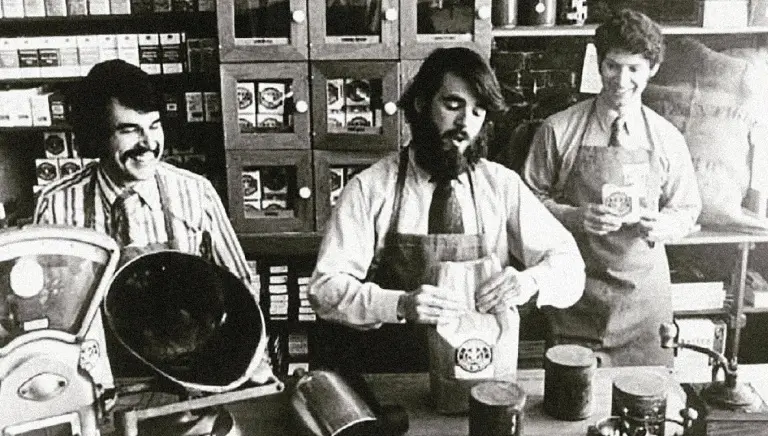
The three met during their university years, and a decade later, they decided to go into coffee together. What united the trio of humanities majors — beyond their youthful bond — was a shared hatred of “terrible coffee.” They were all fans of premium-quality brews. Their initial capital was modest: just $9,050. Each co-founder contributed $1,350, and they secured an additional $5,000 loan through a small business development program.
Since Seattle is a port city, and their first shop was planned near the port in a market hall, they decided to give the store a nautical theme in both name and logo. According to the “romantic version” of the brand’s origin, the name Starbuckswas inspired by Starbuck, the first mate of the whaling ship Pequod in Herman Melville’s Moby-Dick — a cornerstone of American Romanticism. (There’s also a version that they originally wanted to name the shop Pequod, but it “didn’t sound right.”)
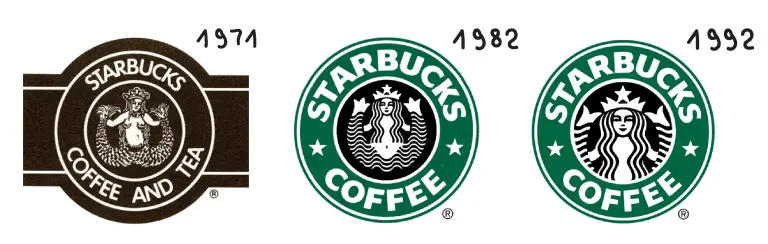
As for the sign above the first Starbucks, it featured a mermaid — copied from a 16th-century Norwegian woodcut — with bare breasts and a double fishtail. The original logo wasn’t green yet, but coffee brown. As Starbucks’ future “emperor” Howard Schultz would later say:
“This topless, Rubenesque siren was meant to be as seductive as the coffee itself.”
The trio’s mentor and the “spiritual father of Starbucks” was Alfred Peet, widely credited as the founder of modern American coffee culture. Peet imported a variety of arabica beans from South America to the U.S. and ran his own coffee shop in Berkeley, California.
Today, arabica makes up roughly 70% of the global coffee market, grown in more than 50 countries within the “coffee belt,” stretching from Brazil and Colombia to Kenya and Guatemala. Arabica beans (with more than 500 qualified varieties) are low in caffeine, but rich in complex, vibrant, and nuanced flavors. That’s what Peet wanted to teach his customers: an appreciation for coffee’s diversity. At the time, most Americans thought of coffee as just… coffee. Always the same. Always equally awful.
At the same time, Alfred Peet was a staunch advocate of “dark roast” coffee, believing that only through this method could the “true flavor and aroma” of coffee be revealed. Back then, light roast was the norm in the U.S., mostly because it was economically more profitable — coffee beans retained more moisture and thus weighed more. But Peet dried out the beans, favoring a much darker roast.
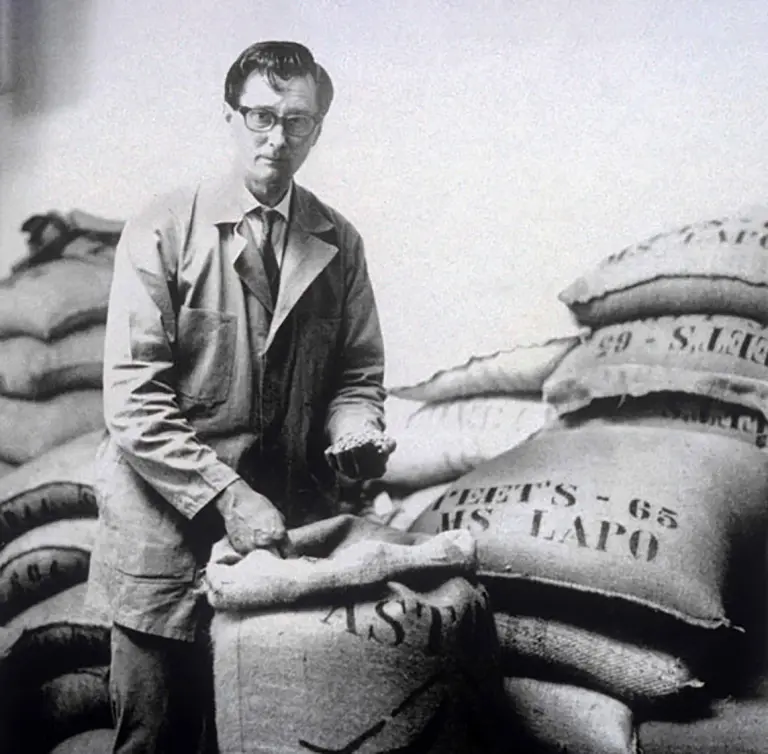
It was from Alfred Peet that Starbucks inherited its original sin — roasting the beans to a near-burnt state, thinking that only this method could produce “real espresso.” This dark roast philosophy has frequently come under fire from coffee experts and industry analysts. It is widely believed that Starbucks’ roasting style suppresses the nuanced flavors of coffee instead of enhancing them. In short, some say only barbarians who know nothing about coffee would roast it like that.
A particularly stinging incident happened in 2007, when Starbucks coffee ranked lower than McDonald’s in a fast-food coffee taste test — an insult hard to top.
When Starbucks opened its very first location, the company found itself in a unique position: they had no experienceand, more importantly, no competitors. The first Starbucks didn’t even have its own roasting facility — it bought its beans directly from Alfred Peet, effectively acting as a reseller. The original lineup included around 30 coffee varietiesfrom all over the world — from Sumatra to Kenya, Ethiopia to Costa Rica. For the average American — who, as the joke went, believed coffee “was born pre-ground in a can” — walking into a Starbucks was a cultural shock.
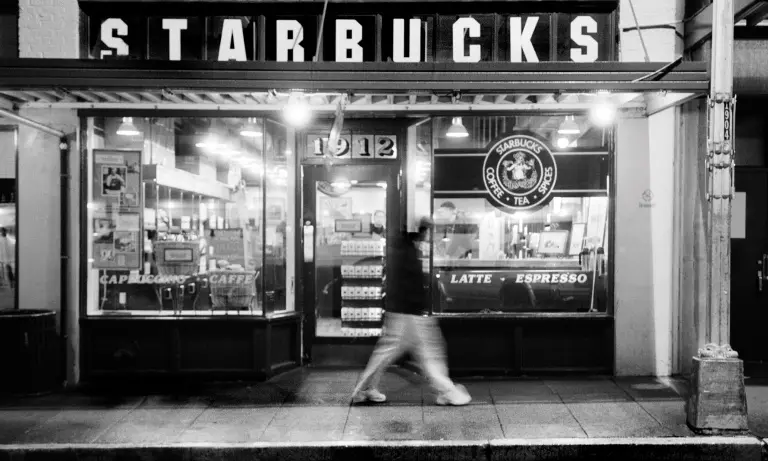
Within just nine months, Starbucks had opened a second shop and set up its own roastery, eventually purchasing beans directly from farmers. Once again, it was Alfred Peet who helped with connections — the kind-hearted mentor who still saw the “mermaid coffee guys” as fellow enthusiasts, not rivals.
Ironically, Siegl, Baldwin, and Bowker weren’t thinking about expansion at all. Two of them even kept their day jobsjust to pay the bills. Most of the time, one of the founders was behind the counter, personally selling beans and spices. And yet, in front of Starbucks lay a vast and untapped American market, ready and waiting for cozy, stylish coffee shops to pop up on every street corner.
To grasp the minuscule scale of the coffee industry in pre-Reagan America, consider this: by 1981, when five Starbucks locations were open in Seattle, they accounted for 3% of the entire U.S. coffee shop market! In other words, there were only about 166 specialty coffee shops in the whole country.
Looking at those numbers, it’s clear that the Starbucks founders were a lot like the McDonald brothers — inventing a revolutionary model, yet hesitant to scale up. Like the McDonalds, they shied away from franchising, reluctant to expand. But eventually, every pioneer is followed by a businessman who takes their idea and turns it into a global empire. For the McDonald brothers, it was milkshake-machine salesman Ray Kroc. For the humanities majors behind Starbucks, it was housewares salesman Howard Schultz…
From Republic to Empire
Howard Schultz’s biography is typical for the early ranks of the Forbes list. The future “emperor” of the world’s largest coffee empire was born on July 19, 1953, in a poor Jewish family in Brooklyn. His parents barely made ends meet, and Howard’s childhood resembled something out of a Woody Allen movie. He started working early, holding a variety of odd jobs — from newspaper delivery boy to animal hide stretcher — all before enrolling at Northern Michigan University.
In 1975, four years after Starbucks had been founded, Schultz graduated with a degree in communications and began his professional journey in the sales department at Xerox. By the time his path crossed with Starbucks in 1981, Schultz was working for a Swedish kitchenware company with a tricky name — Hamamaplast. There, he noticed an odd pattern in the data: a single coffee shop in Seattle was ordering more manual coffee brewers than the entire Macy’s department store chain — this despite the fact that most of America had already switched to electric coffee machines (which often overheated the coffee and ruined the taste).
Just like Ray Kroc once noticed that a tiny California burger joint was ordering six milkshake mixers instead of one — and traveled there to witness the “miracle with his own eyes” — Howard Schultz decided to fly to Seattle and see Starbucks for himself. It was at this moment that history changed, and humankind began developing yet another energizing habit: drinking a lot of coffee. Today, the average Starbucks customer visits a store 18 times per month.
At Starbucks, Schultz was served “the strongest coffee of his life” — the kind that, as he later put it, “would be sacrilege to add sugar or milk to.” The aroma of that jet-black coffee was so intoxicating that Schultz quit his $75,000-a-year jobselling housewares and spent nearly a year convincing the original founders of Starbucks to hire him as head of sales — for half the salary. Finally, in 1982, Schultz’s dream came true, and he began working to reform Starbucks from the inside.
To truly reform the coffee business, however, one needs inspiration. And for inspiration, one must go to the birthplace of the coffeehouse — Italy. It was there, in 1640, that Venetians, having borrowed the concept from the Turks, opened the first café in the modern sense of the word. In 1983, while traveling through Italy, Howard Schultz had an epiphany — and it would forever change his vision for Starbucks.
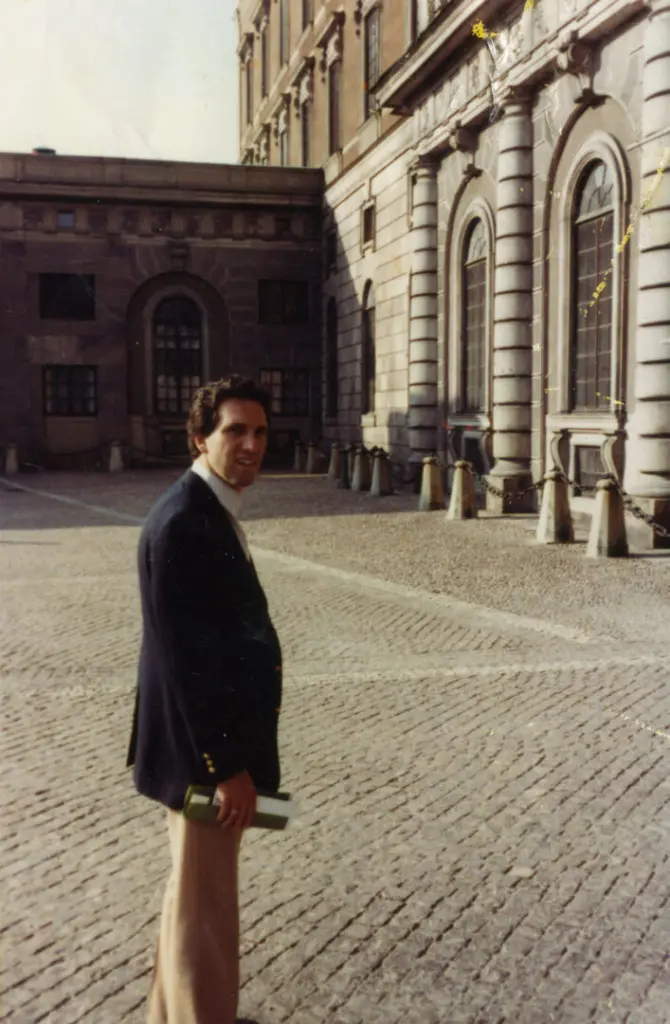
In the U.S., a “cup of coffee” was traditionally associated with a roadside diner — cheap, quick, and forgettable. But in Italy, a coffee shop is “a second home, a place you want to return to again and again,” a place “where the barista knows your name, your problems, and your joys.” From this cultural contrast came a very logical question: Why was Starbucks selling bags of beans, coffee machines, grinders, and filters — but not actual cups of coffee?
When Schultz returned to Seattle, he posed this very question to the Starbucks founders: Why do we sell coffee but not serve it? He had also brought back with him the recipes for cappuccino and latte, essentially introducing Americans to these now-beloved coffee styles. But the Starbucks founders resisted change. They wanted to remain a small, cozy network of coffee retailers, not evolve into a café chain. Schultz, however, had a vision — he saw a global network of welcoming, Italian-inspired coffee bars.
Eventually, he convinced Zev, Jerry, and Gordon to let him open two “espresso bars” in Seattle, where customers could enjoy a proper cup of coffee, go on a date, or hold a business meeting. These locations performed well, attracting steady foot traffic — but the founders weren’t interested in expansion. They just loved good coffee, and as they put it, “If too many people start coming, we won’t be able to remember all their names.”
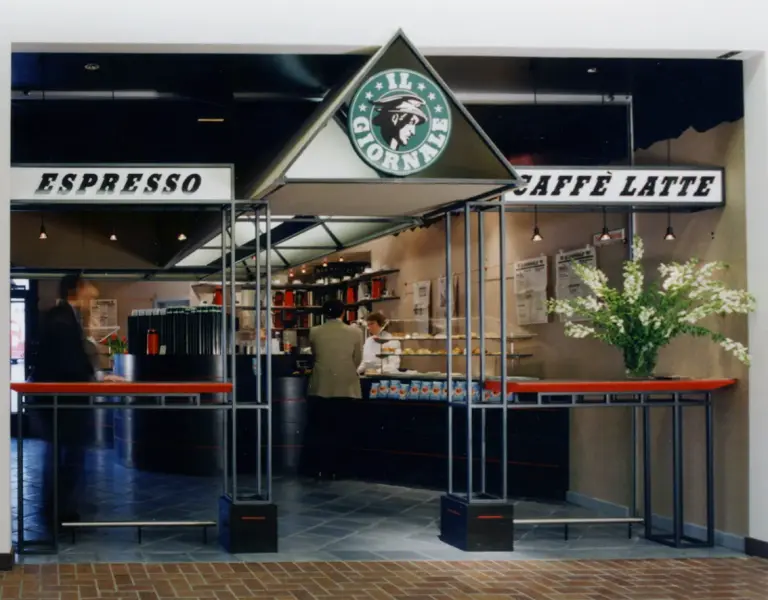
And so, in 1985, Howard Schultz left Starbucks and founded his own chain of Italian-style coffee shops called Il Giornale (meaning “The Daily”). Raising the $1.7 million in startup capital took over a year — and a lot of persuasion.
None of the investors believed that “Americans would ever learn to enjoy espresso like Italians.” Nor did anyone believe that the average American would pay $1.50 for a cup of coffee. Whenever Schultz claimed that “one day people will say ‘a cup of Starbucks’ instead of ‘a cup of coffee’,” he was usually met with laughter.
As funny as it may sound, Starbucks itself was the first investor in Schultz’s coffeehouse chain. The original founders believed in his vision — they just wanted to focus on selling coffee machines and bags of beans, not running cafés. At first, everything was going well: Italian opera and jazz played in the background, smiling baristas in white shirts and bow ties greeted customers, and fresh newspapers hung on wooden bars.
However, there were no tables. Still, Schultz’s coffee shops quickly grew in popularity, with daily foot traffic rising from 300 to over 1,000 visitors. The third coffee shop opened in Vancouver, Canada, to give the business a bit of an “international flair.” Mistakes were fixed on the go. For instance, tables had to be added, since Americans weren’t yet accustomed to the idea of “coffee to go.”
But overall, Schultz’s idea worked — and business thrived. Meanwhile, Starbucks itself wasn’t doing so well. In 1984, the founders purchased Peet’s Coffee & Tea in Berkeley, the company owned by their mentor Alfred Peet. That purchase turned out to be a fatal misstep. The business started to flounder, and the management found themselves stretched thin between two separate operations in different cities.
To make things worse, a frost in Brazil in 1986 destroyed much of the green coffee crop, sending bean prices soaring. American consumers cut back on coffee purchases, and Starbucks began sliding toward bankruptcy.
So in 1987, the three coffee romantics made a fateful decision: they sold Starbucks to Howard Schultz.
This marked the beginning of Starbucks’ global story. The little coffee shop had taken its first step toward becoming one of the most valuable multinational corporations in the world.
The Coffee Empire
After acquiring Starbucks, Howard Schultz merged his two businesses under one umbrella and the single name “Starbucks.” Now, Starbucks was both a coffee store and a coffeehouse chain — something between a shop and a restaurant. The six original coffee shops quickly turned into seventeen cafés.
At first, Schultz followed the McDonald’s franchise model, selling Starbucks franchises, but within a year he redirected the funds toward building a company-owned store network. To this day, the number of franchised Starbucks locations remains significantly lower than the number of company-operated stores. Starbucks fundamentally does not focus on franchising. One could say that Starbucks is “McDonald’s in reverse,” as Schultz always believed that preparing coffee required much more control and precision than assembling a hamburger.
By 1988, Starbucks had 33 stores; in 1989, that number grew to 55, and by 1990, the network expanded to 84 locations. Schultz’s approach proved to be right — competitors began popping up, imitating the design and trying to capture the spirit of Starbucks.
One of Schultz’s first moves was a rebranding. The logo was made “more friendly”: the brown color was replaced with green, the siren was centered, her bare chest was covered with hair, and somehow, a navel appeared on her belly.
As soon as Schultz took over Starbucks, he faced a major issue — liquidity. And yet, the new owner didn’t just want to stay afloat — he planned an aggressive expansion. But expanding couldn’t be done on current profits alone. Opening new coffeehouses required upfront investment — to purchase and renovate spaces, buy equipment, and hire staff.
So, in 1990, Schultz began gathering a group of investors who would finance the construction of his coffee empire. It was the era of IT capitalism, and few people believed that big money could be made by selling expensive and bitter coffee. Howard Schultz clearly wasn’t Steve Jobs. Yet, he managed to raise $13.5 million for the initial push.
Where did the money go? Schultz insisted on three priorities:
- A competent team of managers and PR specialists to create a company-wide expansion strategy;
- A new roasting plant to distribute Starbucks-branded coffee across the U.S.;
- A computer system to monitor operations and maintain coffee quality in every new location.
Schultz was building a centralized, vertically integrated company, rejecting contractors and middlemen. Starbucks continued sourcing coffee beans directly from farmers, with its list of suppliers growing steadily.
At the same time, Schultz made sure that the signature “Starbucks touches” invented by the original founders remained intact during the company’s scaling. The barista’s personal connection with customers evolved into writing your name on the cup, and the challenge of preserving coffee quality during cross-country shipping was solved through vacuum packaging, since all coffee was still roasted at a single plant in Seattle.
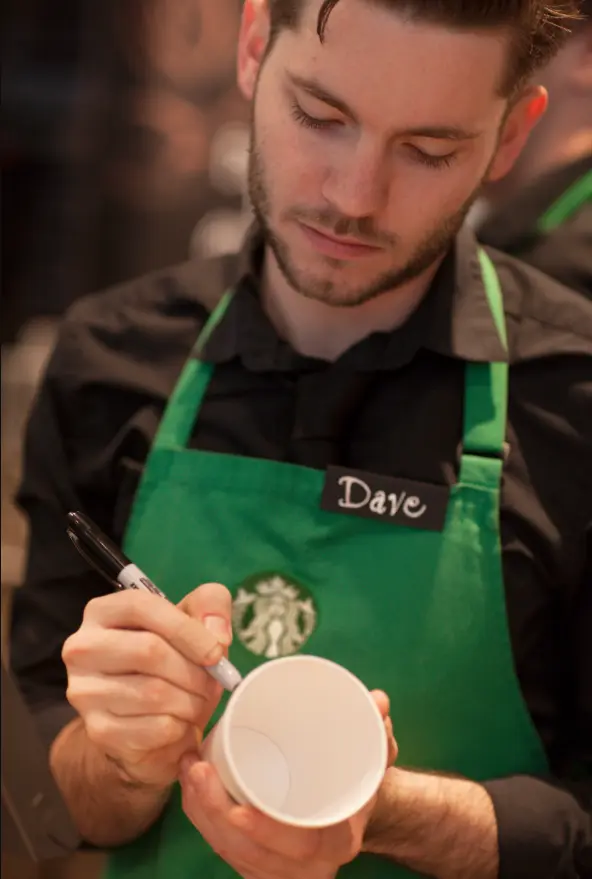
Later, Starbucks introduced its own line of instant coffee. And although many predicted that Schultz would lose part of his “audience,” it turned out that bad instant coffee doesn’t taste much different from bad brewed coffee.
After two years of aggressive expansion, Starbucks had gained enough strength to go public in 1992, launching an IPO on the New York Stock Exchange. At that point, the company had 165 operating stores and 21 years of history. On the first day of trading, Starbucks shares rose from $17 to $21, and by the end of the quarter, they reached $33 per share. The company’s total market capitalization was estimated at $271 million. By selling a 12% stake, Starbucks raised $25 million for the next stage of expansion.
That moment marked the start of Starbucks’ avalanche-style growth. Throughout the 1990s, the company opened more than one store per day — over 400 locations per year! Starbucks began appearing on practically every street corner in America. Just look at the growth timeline:
- 1993 – 172 stores
- 1994 – 355
- 1995 – 677
- 1996 – 1,015
- 1997 – 1,412
- 1998 – 1,886
- 1999 – 2,498
- 2000 – 3,501
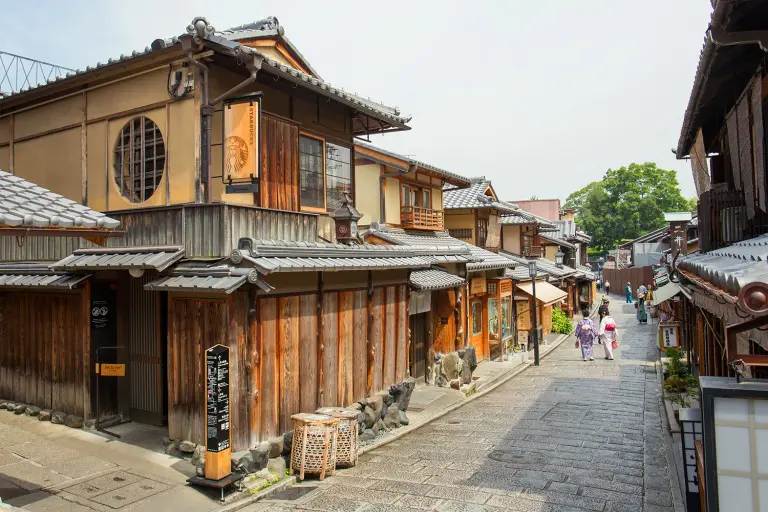
Starbucks expanded beyond the U.S. and began conquering the world — starting not with Europe, but with Asia and the Middle East: Japan, Singapore, China, South Korea, Taiwan, Thailand, Hong Kong, Malaysia, New Zealand, Australia, Saudi Arabia, Bahrain, Qatar, the UAE, and Lebanon. The only European country to initially attract Starbucks’ attention was the United Kingdom.
Even after such a successful run in the 1990s, bankers and investors doubted whether this rate of growth could be sustained. The only one who didn’t doubt was Howard Schultz, who saw himself as the world’s coffee monopolist.
In fact, Starbucks’ geometric growth model rests on three pillars, and the large liquidity injections were only one of them. The second pillar was the company’s special approach to employees, which drastically reduced turnover. The third was an unconventional advertising strategy, which helped Starbucks reach 70% brand recognition.
As early as 1987, when Schultz first took over Starbucks, he promoted a philosophy that employees and customers are one family, and that a Starbucks coffeehouse is a place to escape both home and work stress.
In a 2010 interview with Harvard Business Review, Schultz shared a story that illustrates his vision of the Starbucks community:
“A barista in Tacoma served the same customer every day, and they became friends. One day, the barista noticed the woman looked unwell. She bravely asked, ‘Is something wrong?’ The woman replied, ‘If I don’t get a kidney transplant, I’ll die.’ Then something miraculous happened: the barista turned out to be a compatible donor. She gave her kidney. It was incredible. I drove to Tacoma just to meet her.”
Despite what could be called standard or even low wages for the food service sector, Starbucks employees who work at least 20 hours a week are eligible for health insurance — a rare and valuable benefit in the U.S. Additionally, before Starbucks went public, long-term employees received stock options (valued at 12% of their annual salary), making them not just workers but partners in the company. This built a sense of ownership — and those options could later turn into cars or even homes.
Schultz stuck with these two innovations even during the 2008–2009 financial crisis, when the company was forced to close 900 stores out of 17,000 to reduce costs.
Thanks to all of the above, Starbucks’ employee turnover rate is five times lower than the industry average. While the average turnover in food service is around 400% (meaning a position might see four different people in one year), Starbucks’ rate is just 65%. This is highly cost-effective because training a new employee ends up being more expensive than offering benefits to a long-term one.
As for Starbucks’ new model of advertising, Schultz was always opposed to direct, aggressive marketing tactics. He rejected loud slogans like “ONLY AT STARBUCKS CAN YOU TASTE THE BEST COFFEE ON THE PLANET,” preferring instead a strategy akin to word-of-mouth marketing. His goal was for Starbucks to quietly become part of every urban dweller’s daily life, always lingering subtly in the background.
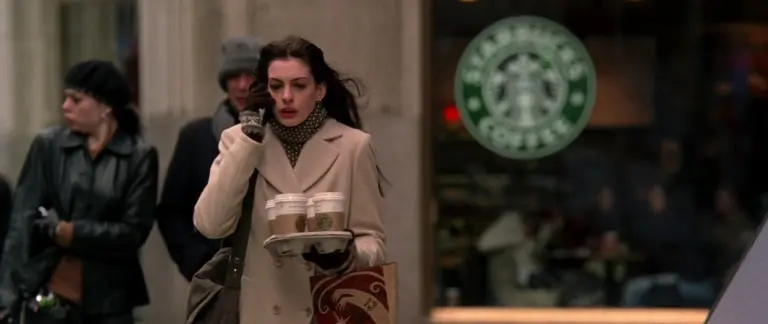
Film enthusiasts have counted that from 1997 to 2022, Starbucks has appeared in 89 Hollywood movies through various forms of subtle or native advertising — from Jurassic Park and The Dark Knight to Fight Club and The Devil Wears Prada. In nearly every case, there’s either a “coffee shop scene” or a recognizable cup featuring the iconic sirenpops up somewhere on screen. The very first movie to include this type of product placement was the 1996 romantic comedy Michael, starring John Travolta.
The most famous on-screen blunder came during episode four of season eight of Game of Thrones, when a Starbucks cup was accidentally left in the shot. That mishap generated such an enormous buzz across social media and made global news headlines that Starbucks’ stock gained $2.3 billion in value — purely due to the attention. Ironically, the cup wasn’t even from Starbucks, but from the Irish company Paper Cup. Still, audiences recognized it as Starbucks.
Today, the Starbucks story continues, although Howard Schultz has stepped down from leadership (first in 2000, then again in 2018). In the 2000s, the coffee empire moved through one European country after another — from Denmark, Cyprus, and Romania to France, Turkey, and the Netherlands — and eventually entered Russia in 2007.
Starbucks now purchases around 4 billion plastic cups annually (just for takeout beverages). In 2023, the company reported $35 billion in revenue and $4 billion in net profit.
A cup of Starbucks coffee has become such a global phenomenon that in 2004, The Economist introduced the “Starbucks Index” — modeled after the well-known “Big Mac Index” (created in 1986). Both indexes use the price of everyday items — a coffee or a burger — to gauge a country’s economic health.
According to 2023 data, the most expensive countries to buy a Starbucks coffee were Switzerland, Denmark, Finland, and Hong Kong. The cheapest were Turkey, Brazil, Egypt, and Peru.