



The ancient Incas never had problems with workers refusing to give them cement but demanding structures built to last centuries. They just knew how to work! And those who didn’t… had their heads cut off. Probably. That’s how the famous Machu Picchu was built. But if only that were all! Count on your fingers.
Machu Picchu — The Place Where the Sun is Tied
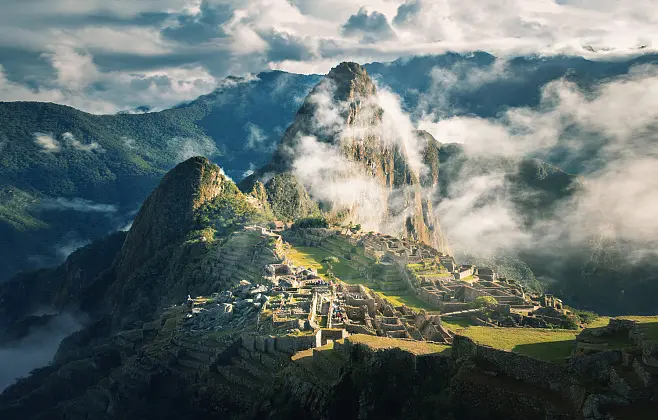
Old Mountain — that’s the translation from the Quechua language of the famous Machu Picchu (of course, it had to be on our list!) — the eighth wonder of the world, the lost city of the Incas, a book written in stone, and many other nicknames for the most famous masterpiece of indigenous civilization. Nowadays, it’s more often called an Instagram mecca or a ruins-themed quest destination. Such a shame! But once upon a time, this place was probably a sanctuary — the sacred residence of the Inca emperor, presumably Pachacuti Yupanki, who built it around 1450. However, by the 1570s the city was abandoned and deserted. Although these dates are approximate — no one really knows the exact time of its construction or the purpose behind it. Machu Picchu is located at an altitude of 2400 meters above sea level.
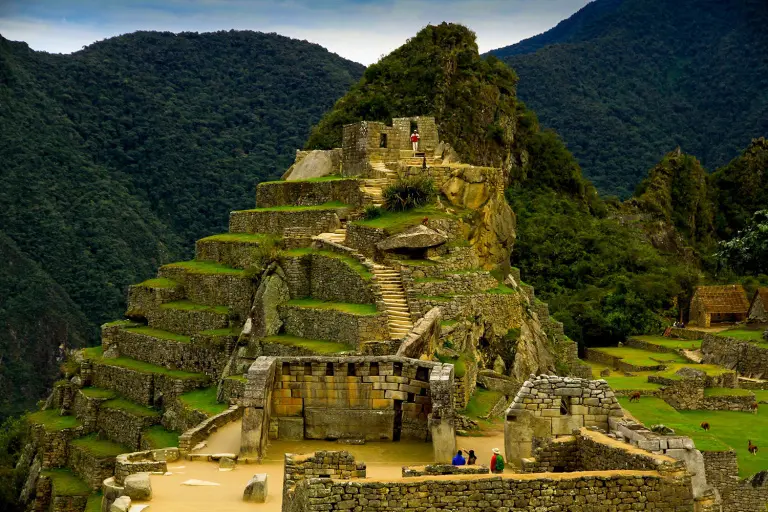
This fact, by the way, saved it from destruction by the Spanish conquistadors — they never reached it. It is believed that up to 1200 people lived in the city and its surroundings, worshipping the Sun god Inti. On top of one of the rocks stands a large polygonal stone called the “Intihuatana,” or “the place where the sun is tied.” Some believe the Incas symbolically “tied” the sun here so it wouldn’t “run away” from them during the winter solstice.
INTERESTING ARTICLE — Course Set for the West Indies: The Story of the Discovery and Colonization of the New World
The Chirping Pyramid of Kukulkan
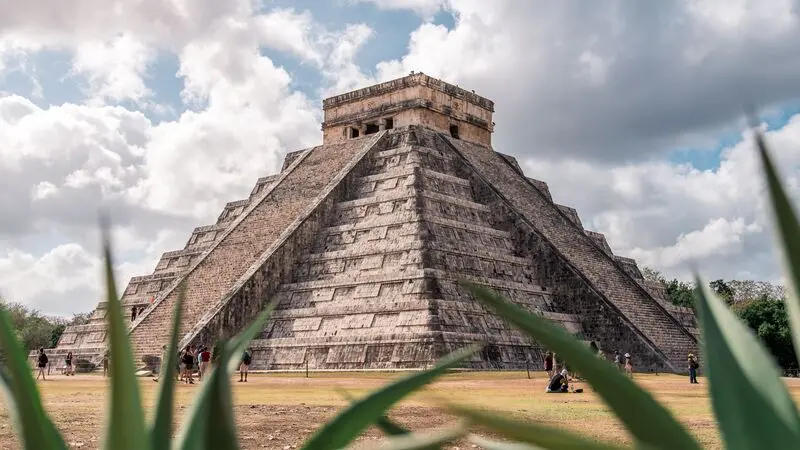
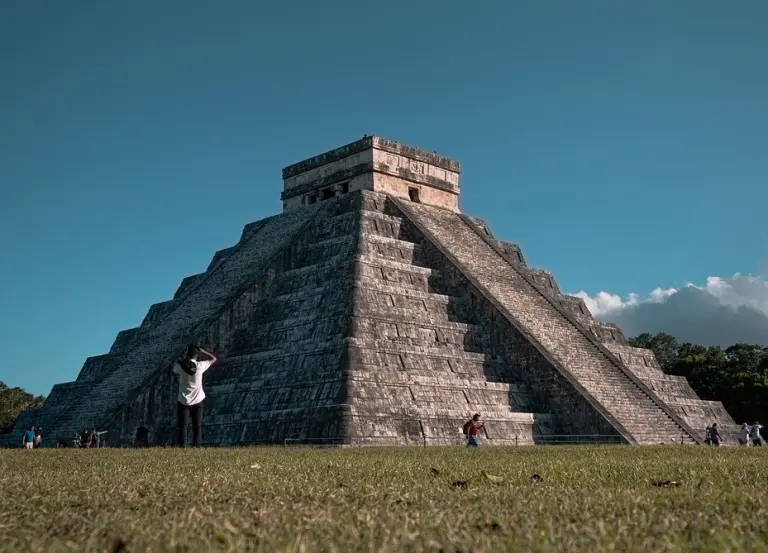
Another famous creation of the “children of the sun and the eagle” is the Kukulkan Pyramid. You can find it among the ruins of Chichen Itza — once the political and cultural center of the Maya civilization, located in northern Yucatan Peninsula. Kukulkan is basically the “equivalent” of Quetzalcoatl — the chief deity of almost all ancient American peoples, depicted as a mixture of bird and snake. And what happened? The Maya went to great lengths and created a pyramid with a “secret.” Every year, during the spring and autumn equinoxes, you can observe the phenomenon of the “feathered serpent,” when the shadow of the pyramid’s stepped edges falls onto the balustrade stones. It looks as if the “serpent” comes alive and slithers (upwards in March, downwards in September). By the way, the pyramid has 364 steps, and together with the balustrade — 365 steps, matching the days in a year. And that’s not all! If you clap your hands near the pyramid, it starts to… chirp. Literally — like a bird. It’s hard to imagine what else the ancient Maya invented to please their gods. Though not so hard — at the top of the pyramid there is a temple where sacrifices were made.
The Maya and “Star Wars”
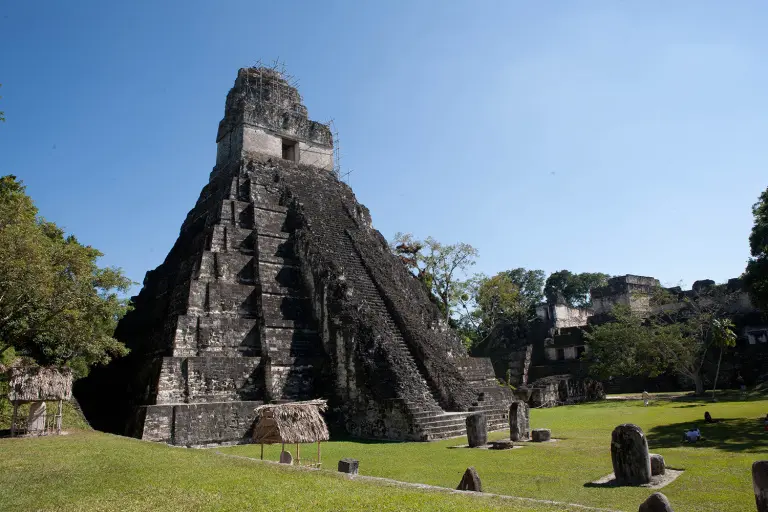
The site of Tikal — the capital of the vanished Mutul Kingdom of the ancient Maya — is another tourist mecca and also a filming location recognized by “Star Wars” fans, where several scenes were shot. You can understand the filmmakers: the place is overwhelmingly epic. Acropolis-like pyramids with temples on top are hidden among the misty jungles of Guatemala, covered with characteristic black moss. There are also twin temples — a model of the Maya world in architecture: next to two platforms for star observation to the south stands a building with nine doors symbolizing the underworld, and to the north — a fenced platform with a stela. Many of these structures are aligned with various celestial objects, for example, the astronomical cycles of Venus. There is also the Great Plaza — the heart of the city, surrounded by temples. And yes, jaguars, toucans, and monkeys live here — you can imagine the apocalyptic atmosphere created by the “City of Voices” (that’s approximately what Tikal means in the Maya language).
The Gate of the Sun
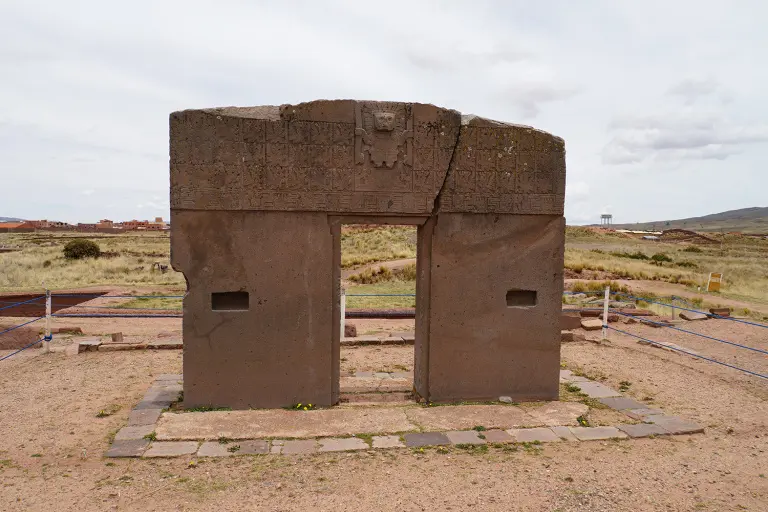
The city of Tiwanaku in Bolivia was built (around the year 110 CE) by a civilization of the same name. Its main highlight is the presence of megalithic stone blocks weighing up to 100 tons (!) that were carved with millimeter precision — as if by laser. The ancient Indigenous people of the Andes were masters of dry stone masonry, showcasing their precision in many other impressive stone structures. Take, for example, the Gate of the Sun — a three-meter-tall and four-meter-wide stone arch. Its upper section is adorned with an ornament (possibly serving as a calendar) featuring a central “weeping” deity. Even more striking is the geometrical precision of the stone joints in the Kalasasaya Temple. Also known as the Temple of the Standing Stones — or the Subterranean Temple, since much of the structure lies below ground — its entrance is a staircase carved from a single block of stone. Like most pre-Columbian buildings, the temple was used for astronomical observations. The nearby standing pillars helped the locals determine the exact date of the 365-day solar year.
Cactus + Straw + Seashells = Ancient City
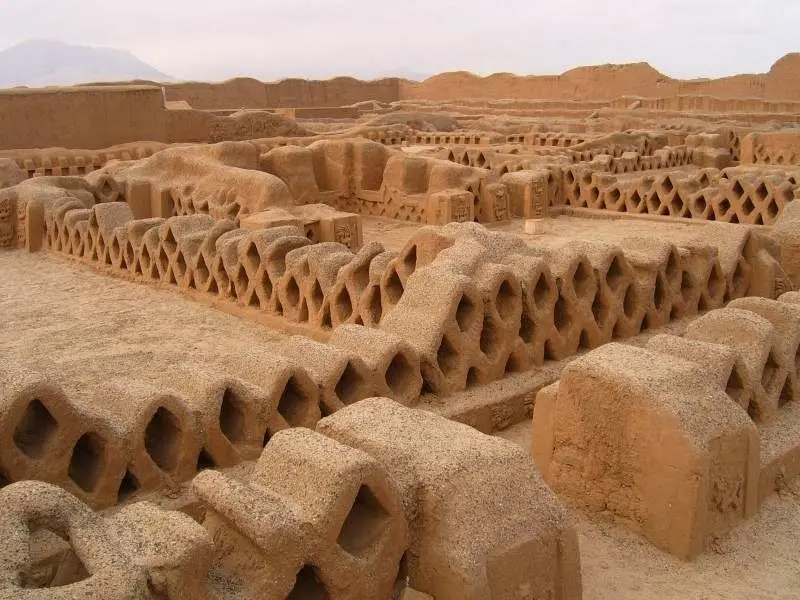
Finally — not stone! While almost everyone has heard of Machu Picchu, far fewer know about this monument of the pre-Columbian Chimú culture, located on the Pacific coast in northern Peru. Unlike the eternal stone creations of the Andes, this site looks refreshingly unique: the city of Chan Chan was built from adobe — unbaked clay mixed with straw, crushed seashells, and even local cactus juice for added strength. The site contains ten rectangular citadels surrounded by walls up to 12 meters high. Each citadel was a self-contained complex with throne rooms, carved columns, maze-like corridors (possibly for defense or protection from the scorching sun), and a ceremonial plaza — always just one. The Chimú spared no effort in decoration: the city’s walls are adorned with bas-reliefs depicting fish, pelicans, gulls, and mythical creatures like the moon dragon.
The Elephant No One Noticed
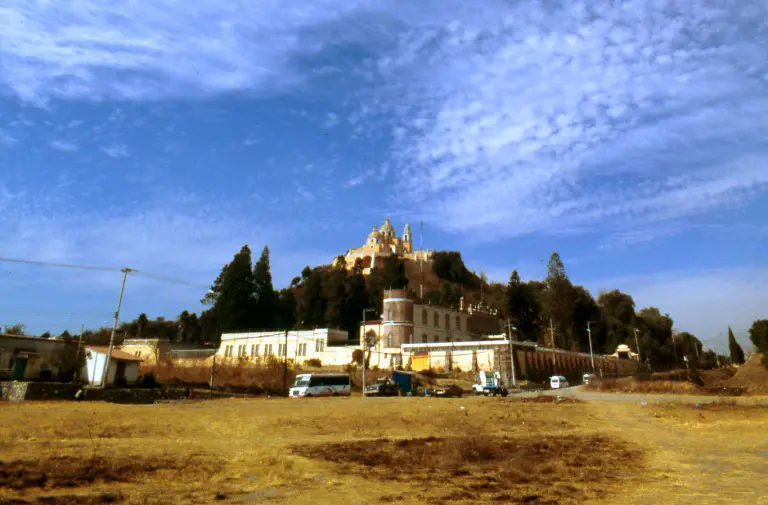
Think the largest pyramid in the world belongs to Pharaoh Khufu? Think again! Have you ever heard of the Great Pyramid of Cholula in Mexico — or, take a deep breath, Tlachihualtepetl? The Spanish conquistadors not only hadn’t heard of it — they didn’t even notice it, despite the fact that the pyramid is considered the largest in the world by volume. And not just considered — it’s officially listed in the Guinness Book of World Records.
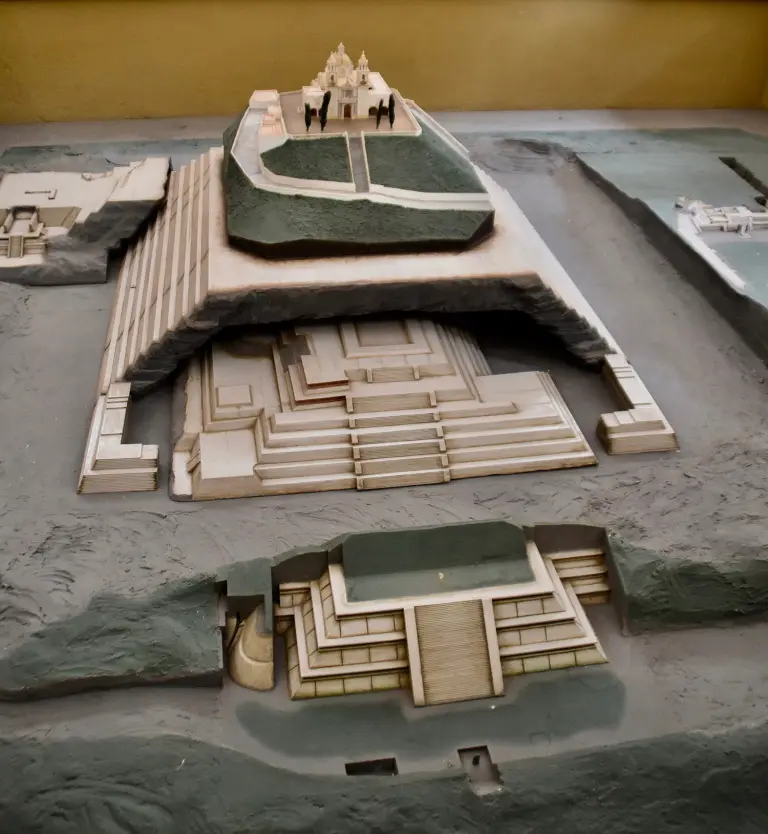
That’s because the structure is almost entirely covered by a “cultural layer” — in simpler terms, soil. Its Nahuatl name literally means “man-made mountain.” Its height is 66 meters (55 meters above today’s ground level). But it wasn’t until 1931 that archaeologists discovered what lay beneath. Excavations revealed eight kilometers of tunnels within the hill. Researchers also learned that the pyramid had been built in seven stages — like a Russian nesting doll. The base is in the Olmec style (featuring altars with painted decorations), the Classic Period (200–600 CE) added stepped platforms and murals, and the final layer was an Aztec temple dedicated to Quetzalcoatl.